The Warning Signs of a Failing Gas Line That Most Homeowners Ignore
Gas lines tend to stay out of sight and out of mind, which is exactly why problems with them are so often overlooked. Most homeowners in SeaTac and throughout King County assume that if their stove lights and their furnace kicks on, everything must be fine. In reality, gas line issues often start small and quietly, long before they turn into something urgent or dangerous.
At Fox Plumbing, Heating & Cooling, we have spent decades helping homeowners across the Greater Seattle area uncover gas line problems they did not even know were there. Many of these issues come with warning signs that seem minor at first. The trouble is that ignoring them can lead to serious safety risks and costly repairs down the road.
That “Faint” Gas Smell You Keep Brushing Off
One of the most common signs of a failing gas line is a smell that homeowners talk themselves out of noticing. Natural gas has an added odorant that smells like rotten eggs, and it is designed to get your attention. Even a faint whiff is not normal.
We often hear things like, “It only smells sometimes,” or “It goes away after a few minutes.” That does not mean it is harmless. Small leaks can come and go as pressure changes in the line or as appliances cycle on and off.
Pay close attention if you notice:
- A gas smell near appliances or utility rooms
- Odors that appear during certain times of day
- Smells near outdoor meters or buried lines
- Headaches or dizziness indoors without another clear cause
Any gas odor is worth taking seriously. Calling a professional early can prevent a small leak from becoming a major emergency.
Appliances That Suddenly Stop Performing Like They Used To
When gas lines begin to fail, appliances are often the first to complain. The tricky part is that the symptoms look like appliance problems, not gas supply issues. A furnace that struggles to heat, or a water heater that runs out of hot water too fast, may not be the real problem.
Gas appliances need consistent pressure and volume to operate correctly. If the line feeding them is corroded, leaking, or partially blocked, performance drops.
Watch for patterns such as:
- Burners that take longer to ignite
- A furnace that short-cycles or shuts off unexpectedly
- Hot water that fluctuates in temperature
- A gas dryer that takes much longer to dry clothes
These issues often show up gradually, which makes them easy to ignore. But they are a strong signal that the gas line is no longer delivering what it should.
Old Piping Materials Hiding Behind the Walls
Many homes throughout Seattle and the surrounding areas still rely on gas piping installed decades ago. While these systems were built to last, they were not built to last forever. Age and material matter more than most homeowners realize.
Older gas lines were commonly made from galvanized steel or early black iron. Over time, these materials corrode from the inside out. That corrosion reduces the inner diameter of the pipe and weakens joints.
Signs your home may have outdated gas piping include:
- A home built before the 1970s with original gas lines
- No record of gas line upgrades or repiping
- Mixed piping materials from past renovations
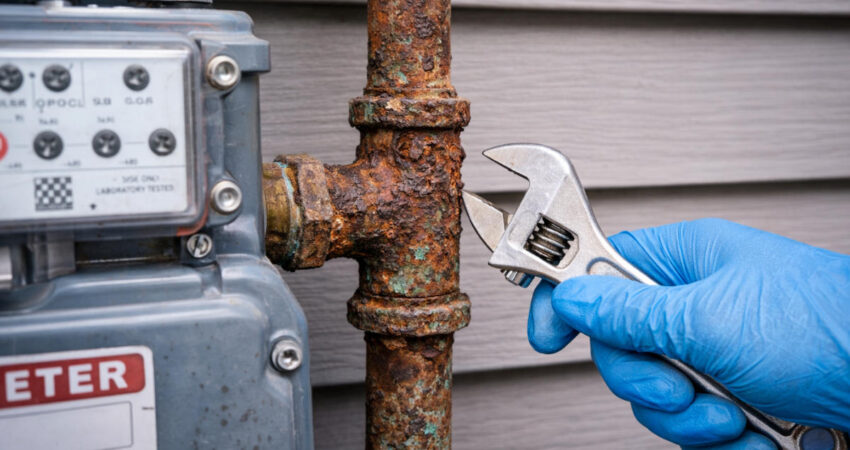
- Visible rust or flaking on exposed sections
Even if everything appears fine on the surface, internal corrosion can quietly restrict flow and increase the risk of leaks.
Hissing, Whistling, or Other Strange Sounds
Gas lines are supposed to be silent. If you hear hissing, whistling, or a faint rushing sound near appliances or piping, that is a red flag. These noises often indicate gas escaping through a small opening or weakened joint.
Homeowners sometimes confuse these sounds with airflow from HVAC systems or normal appliance operation. The difference is consistency. Gas line noises often persist even when appliances are not actively running.
Take note if you hear:
- A steady hiss near the gas meter
- Whistling sounds behind walls or cabinets
- Noise that increases when appliances turn on
- Sounds paired with a gas odor
If you ever hear these noises, it is best to shut off the gas if it is safe to do so and call a professional right away.
Higher Gas Bills With No Clear Explanation
Utility bills can be sneaky indicators of gas line trouble. When a line is leaking or appliances are running inefficiently due to pressure issues, gas usage goes up. Many homeowners chalk this up to colder weather or rate increases, but sometimes the math does not add up.
A failing gas line can waste fuel even when appliances are off. Small leaks add up over time, and inefficient combustion caused by pressure problems forces appliances to work harder.
You might notice:
- Gradually rising gas bills year over year
- Sudden spikes with no change in usage habits
- Higher costs during mild weather
- Appliances running longer to do the same job
If your bills are climbing and nothing else explains it, your gas line deserves a closer look.
Cracked Foundations, Soil Shifts, and Outdoor Warning Signs
Gas lines do not only run inside your home. They also travel underground, and outdoor conditions play a big role in their health. In the Pacific Northwest, soil movement, moisture, and seismic activity all take a toll over time.
Shifting soil can stress buried gas lines, causing cracks or joint failures. Tree roots and erosion can also damage older piping.
Outdoor signs that often go unnoticed include:
- Dead or discolored patches of grass near the gas line
- Bubbling in wet soil
- A sulfur smell near the meter or yard
- Visible damage to the gas meter or riser
These symptoms are easy to miss unless you know to look for them, but they can point to serious underground issues.
Why Ignoring These Signs Can Get Risky Fast
Gas line problems rarely fix themselves. What starts as a small leak or pressure issue tends to get worse with time. The risks go beyond inconvenience and higher bills.
Failing gas lines can lead to:
- Fire hazards from escaping gas
- Carbon monoxide issues from improper combustion
- Appliance damage from inconsistent fuel supply
- Emergency shutdowns during peak heating season
We have seen many situations where homeowners wish they had called sooner. Addressing gas line issues early is almost always safer and more affordable than waiting until something fails completely.
Fox Plumbing, Heating & Cooling Can Catch Gas Line Problems Before They Escalate
Most homeowners ignore gas line warning signs because they are not sure what they are seeing, or smelling, or hearing. That hesitation is understandable, but it is also where small issues turn into serious ones. The good news is that you do not have to guess.
Fox Plumbing, Heating & Cooling has been serving SeaTac, King County, and the Greater Seattle area since 1964. Our experienced technicians know exactly what to look for when it comes to aging or failing gas lines. We can inspect your system, identify hidden problems, and recommend clear solutions that protect your home and family.
Call Fox Plumbing, Heating & Cooling Before a Small Gas Line Warning Becomes a Big Problem
If something feels off with your gas appliances or you have noticed any of the warning signs above, give us a call at (833) 535-6836 or contact us online for professional gas line repair and installation. We are here to help you stay safe, comfortable, and confident in your home, today and for years to come.