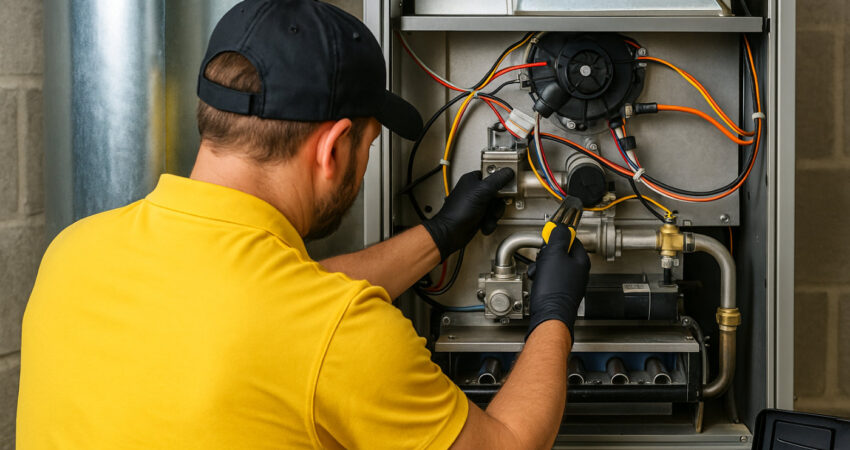
Fall Furnace Tune-Up Checklist for Seattle, WA Homeowners
Your furnace has likely sat unused since spring, and the first real cold snap of the season is exactly the wrong time to discover something’s wrong with it. A fall tune-up catches small problems while they’re still small, before they turn into a no-heat call in the middle of a January cold front. Here’s what a real furnace tune-up actually covers, and how to tell the difference between something you can check yourself and something that needs a professional.
Why Fall Is the Right Time for a Furnace Tune-Up
Seattle’s furnaces spend most of the year idle, running only during the coldest months. That downtime is exactly when problems develop quietly: dust settles inside the cabinet, spiders and insects find their way into burner assemblies, and components that were fine in the spring can be seized, corroded, or miswired by the time you need heat again. Scheduling a tune-up in early fall, before the season’s first genuinely cold week, means any issue gets caught and addressed on your timeline rather than during an emergency. It also means you’re not competing with every other Seattle homeowner calling in a panic once the temperature actually drops.
What to Check Yourself
A few parts of furnace readiness are safe and simple enough to handle without a technician:
Replace or clean the air filter – A dirty filter restricts airflow, forces your furnace to work harder, and also lets more dust and debris circulate through your home, which is worth keeping in mind if indoor air quality is a concern in your household.
Clear the area around your furnace – Remove any stored items, boxes, or debris from around the unit. Furnaces need clearance to breathe safely and to allow a technician easy access if service is needed.
Test your carbon monoxide detectors – Press the test button on every CO detector in your home and replace batteries if needed. This takes thirty seconds and is one of the most important safety checks you can do yourself.
Check your thermostat – Confirm it’s working, displaying the correct temperature, and that batteries (if applicable) are fresh. A thermostat reading incorrectly can make a perfectly healthy furnace seem like it’s malfunctioning.
Look and listen for anything unusual – Note any strange smells, sounds, or visible rust or soot around the unit itself. You don’t need to diagnose what it means, just be ready to describe it if you schedule a professional visit.
What Needs a Professional
The rest of a genuine tune-up requires training, tools, and access most homeowners don’t have, and several of these items are directly safety-related rather than just performance-related:
Heat exchanger inspection – The heat exchanger separates combustion gases from the air circulating through your home. A cracked or corroded heat exchanger can allow carbon monoxide into your living space, a serious hazard that isn’t visible without proper inspection equipment.
Flame sensor and igniter testing – A dirty flame sensor is one of the most common causes of a furnace that won’t stay running. A weak igniter may still technically work but cause inconsistent startups, a sign it’s close to failing outright.
Blower motor and airflow check – Technicians test motor amperage against manufacturer specifications and measure static pressure to confirm air is actually moving through your ductwork efficiently.
Gas pressure and combustion testing – For gas furnaces, technicians verify gas pressure is within the correct range and that combustion is clean and complete, both of which affect efficiency and safety.
Electrical connections and controls – Loose connections, worn wiring, and failing safety switches all get checked and tightened or replaced as needed.
If any of these turn up a real problem rather than a simple adjustment, that’s the point where a tune-up becomes a furnace repair rather than routine maintenance, and it’s worth having it addressed before the system is relied on through a full winter.
Signs Your Furnace Needs Repair, Not Just a Tune-Up
A few signs point toward a repair need rather than routine maintenance:
- The furnace won’t turn on at all, or shuts off shortly after starting.
- You notice a burning smell that doesn’t fade after the first few minutes of operation.
- Your energy bills have climbed with no change in usage.
- Certain rooms are noticeably colder than others despite a working thermostat, sometimes a furnace issue, but sometimes a sign your ductwork needs attention too.
- The system is making new noises, banging, screeching, or rattling, that weren’t there before.
If any of these apply to your home, it’s worth scheduling a repair visit before the tune-up alone, since a tune-up won’t resolve an underlying mechanical, airflow, or safety issue.
A Note on Carbon Monoxide Safety
Carbon monoxide is odorless and invisible, which is exactly what makes a working detector and a professional heat exchanger inspection non-negotiable parts of furnace safety. If your CO detector ever sounds an alarm, leave your home immediately, get everyone outside to fresh air, and call 911 from a safe location before doing anything else. Don’t try to identify the source yourself or re-enter the home until emergency responders confirm it’s safe. This is different from a routine furnace problem, treat a CO alarm as a genuine emergency every time.
Scheduling Your Fall Furnace Maintenance in Seattle
A full professional furnace maintenance visit typically takes one to two hours and covers everything on this list beyond what’s safe to check yourself. Scheduling it in early fall, rather than waiting for the first cold snap, means you’re getting a technician’s full attention rather than being squeezed into a packed emergency schedule. If your furnace is due for maintenance, or the inspection turns up a repair you weren’t expecting, financing options are available to help make the cost more manageable.
Fall Furnace Tune-Up FAQs
Cost varies based on your furnace type and whether any issues are found during the inspection. We provide upfront pricing before any additional work begins, so a routine tune-up never turns into a surprise bill.
Most residential furnace tune-ups take one to two hours, depending on your system’s age and condition. If the inspection uncovers a repair need, that may extend the visit or require scheduling a follow-up.
You can handle basic tasks like filter replacement and testing your CO detectors, but a full tune-up involves inspecting the heat exchanger, testing gas pressure, and checking components that require professional tools and training to assess safely.
Skipping maintenance doesn’t guarantee a breakdown, but it does increase the odds of one, and it means small issues go uncaught until they become bigger, more expensive problems, often during the coldest part of winter when you can least afford to be without heat.
Yes. A tune-up is routine maintenance meant to catch problems early and keep your system running efficiently. A repair addresses a specific issue that’s already causing a problem, whether that’s discovered during a tune-up or from a furnace that’s actively malfunctioning.
Early fall, before the first sustained cold stretch, is ideal. This gives you time to address any issues the inspection finds before you actually need the furnace to perform reliably.
Get Your Furnace Ready Before Winter Arrives
A fall tune-up is one of the simplest ways to avoid a mid-winter breakdown, and it’s far less stressful to schedule now than to deal with a no-heat emergency later. If your furnace is due for maintenance, or you’re noticing any signs it might need repair, Fox Plumbing, Heating & Cooling is ready to help. Call (833) 535-6843 to schedule your fall furnace tune-up today.